Method for Determining Residues of Erythromycin and Its Degradation Products in Bee Products Using Anyeep TQ9120
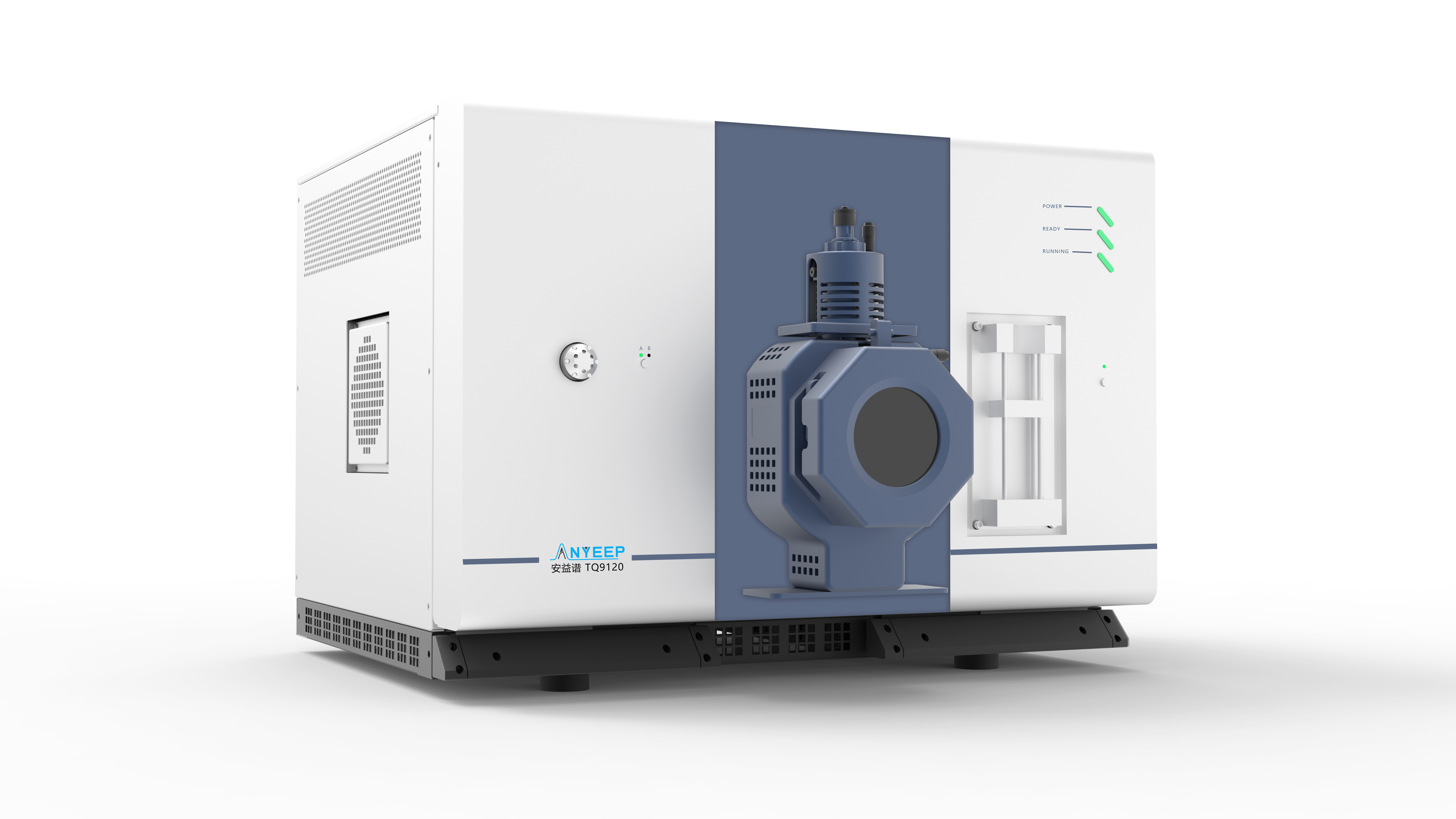
This study established a method for detecting erythromycin and its degradation products in bee products using the Anyeep TQ9120 ultra-high-performance liquid chromatography-tandem mass spectrometry system from AnyiPu. The method demonstrated excellent linearity, with detection limits and quantification limits meeting relevant standard requirements. Using this method and equipment, erythromycin and its degradation products in bee products can be effectively detected and quantified.
Erythromycin is a basic antibiotic produced by the bacterium Streptomyces erythreus. It belongs to the macrolide class and exhibits strong inhibitory activity against Gram-positive bacteria, as well as moderate inhibition of Gram-negative bacteria. GB 31650-2019, "National Food Safety Standard—Maximum Residue Limits for Veterinary Drugs in Food," specifies the maximum residue limits for erythromycin in various edible tissues as follows:40 μg/kg - 200 μg/kg.
This document follows the "GB"31657.11-2025In accordance with the requirements of the National Food Safety Standard "Determination of Residues of Erythromycin and Its Degradation Products in Bee Products by Liquid Chromatography-Tandem Mass Spectrometry," we developedHoneyErythromycinand degradation productsLiquid chromatography-tandem mass spectrometry method for residue determinationThis method exhibits high sensitivity, good linearity, and precision.Recovery RateAll methodological parameters meet the standard's requirements.
Instruments and Reagents
Anyeep TQ120 Ultra-High Performance Liquid Chromatography-Tandem Mass SpectrometrySystem
Acetonitrile, Methanol(MS-grade, from Thermo Fisher Scientific, USA)
Formic acid (mass spectrometry grade, CNW Technologies, Germany)
Sodium chloride, anhydrous sodium sulfate, anhydrous magnesium sulfate (analytical grade, Anpel Shanghai)
PSA (40-60μm, SBEQ-CA2401, Anpel Shanghai)
Erythromycin A and Dehydrated Erythromycin A Reference Standards (Anpel, Shanghai)
Liquid Chromatography Conditions
Mobile PhaseA: 0.1% formic acid, water
Mobile Phase B: Methanol
Chromatography column: Waters Acquity UPLC BEH C18, 1.7μm, 2.1×100 mm
Column Temperature:30 ℃
Flow rate: 0.3 mL/min
Injection volume:2 μL
Mass Spectrometry Conditions
Ionization Source: Electrospray Ionization Source (ESI)+)
Source Temperature: 350 ℃
Spray Voltage: 5000 V
air curtain: 35 psi
Mist gas: 50 psi
Auxiliary Gas: 70 psi
Crash: 8
Scan Mode:MRM
Gradient elution program
Timemin | A% | B% | Flow RatemL/min |
0.0 | 55 | 45 | 0.3 |
1.0 | 40 | 60 | 0.3 |
4.0 | 30 | 70 | 0.3 |
4.1 | 2 | 98 | 0.3 |
5.0 | 2 | 98 | 0.3 |
5.1 | 55 | 45 | 0.3 |
8.0 | 55 | 45 | 0.3 |
Analyte MRM Parameters
No. | Test Item | Q1 Ion | Q3 Ion | Residency Time (ms) | CE (V) | DP (V) |
1 | Erythromycin A | 734.3 | 157.9* | 50 | 21 | 150 |
|
| 734.3 | 576.0 | 50 | 15 | 150 |
2 | Dehydrated Erythromycin A | 716.0 | 158.0* | 50 | 21 | 150 |
|
| 716.0 | 558.0 | 50 | 15 | 150 |
Note: * indicates the quantification ion pair.
Sample Processing
Sample Processing:Weigh 5.0 g of honey sample into a 50 mL centrifuge tube with an accuracy of 0.05 g. Add 5 mL of water and vortex for 30 s. Then add 10 mL of acetonitrile and sonicate for 10 min. Add 4 g of anhydrous sodium sulfate and 1 g of sodium chloride, vortex for 1 min, and centrifuge at 9000 rpm for 10 min. Transfer 5 mL of the supernatant to another centrifuge tube. Add 400 mg of PSA and 1200mg g of anhydrous magnesium sulfate, vortex for 30 s, and centrifuge at 8000 rpm for 5 min. Pass the supernatant through 0.22.μm filter membrane, analyte.
Matrix-matched mixed standard series solutions:Accurately pipette an appropriate amount of the mixed standard working solution into the honey blank extract that has been extracted and purified. Dry under a nitrogen stream at 40 °C, reconstitute with acetonitrile using vortex mixing, and prepare a series of matrix-matched mixed standard solutions with final concentrations of 0.5, 1, 2, 5, 10, 25, 50, and 100 ng/mL.
Recovery Rate Sample:Add a specified amount of erythromycin A and 10-deoxymethycin A reference standards to the sample, followingSample ProcessingPerform the operation to configure the final content as 10, 20, and 50.μg/kgRecovery rate samples. Prepare 6 replicates for each concentration.
Linear Range
Test Item | Retention Time min | Limit of Detection μg/kg | Limit of Quantitation μg/kg | Linear Range n mL | Linear Equation 1/x2Weighted | correlation coefficient r2 |
Erythromycin A | 2.490 | 0.1 | 1 | 0.5-100 | Y = 1185.53 * X + 147.46 | 0.9984 |
Dehydrated Erythromycin A | 2.598 | 0.1 | 1 | 0.5-100 | Y = 814.188 * X - 39.859 | 0.9983 |
Precision and Recovery
Test Item | background μg/kg | Add label μg/kg | 1 | 2 | 3 | 4 | 5 | 6 | Precision | Recovery Rate |
Erythromycin | 0.00 | 10 | 11.55 | 11.03 | 10.98 | 10.67 | 10.63 | 10.29 | 3.98% | 108.58% |
| 0.00 | 20 | 17.25 | 16.87 | 16.88 | 16.37 | 16.24 | 16.22 | 2.54% | 83.19% |
| 0.00 | 50 | 42.65 | 41.78 | 41.15 | 40.83 | 40.30 | 40.43 | 2.17% | 82.38% |
Dehydrated Erythromycin A | 0.00 | 10 | 9.79 | 9.76 | 8.89 | 9.08 | 9.50 | 8.91 | 4.44% | 93.22% |
| 0.00 | 20 | 15.76 | 14.94 | 14.85 | 16.07 | 15.10 | 15.53 | 3.18% | 76.88% |
| 0.00 | 50 | 36.49 | 37.88 | 37.18 | 36.88 | 36.37 | 36.45 | 1.58% | 73.75% |
Summary
This article establishes Anyeep TQ9120 Ultra-High Performance Liquid Chromatography-Tandem Mass Spectrometry SystemMethod for Determining Residue Levels of Erythromycin and Its Degradation Products in Bee ProductsAs the results show,The method exhibits excellent sensitivity, stability, and a wide linear range.All relevant metrics meet the required standards.Suitable forResidue levels of erythromycin and its degradation products in aquatic productsofRoutine analysis and testing.